
Searching for a Warrant in Hill County
There is no verified public Hill County warrant portal. The Sheriff’s Office gives the official phone and open-records route, while the District Clerk routes felony and misdemeanor case records through the county court portal. Neither route is a complete index of every JP and city case.
Use the cause or citation number if you have it. A name can be shared by more than one person, and the research did not verify a public name or birth-date field. Follow these steps:
- Call the Sheriff at 254-582-5313 if you need the county law-enforcement office to route an arrest-warrant question.
- For a felony or misdemeanor file, open the District Clerk’s court portal or ask the clerk what records can be viewed.
- For a traffic or Class C matter, call the JP precinct or municipal court on the citation.
- Send the relevant office a narrow request for an existing policy, case record, or redacted field list if no public status appears.
- Use DPS only for an FTA/FTP license hold, then ask the court and an attorney about any confirmed process.
Hill County Warrant Portals Do Not Show Warrant Fields
The Tyler portal opens to court information, but the reviewed static interface did not expose warrant-specific controls, status labels, or an unauthenticated field list. The District Clerk describes the portal as a case-information route. Do not call it an active-warrant search or assume that a blank result covers city and JP process.
The portal’s landing screen is shown here. Use the official Hill County portal for case routing, then contact the court that holds the file.
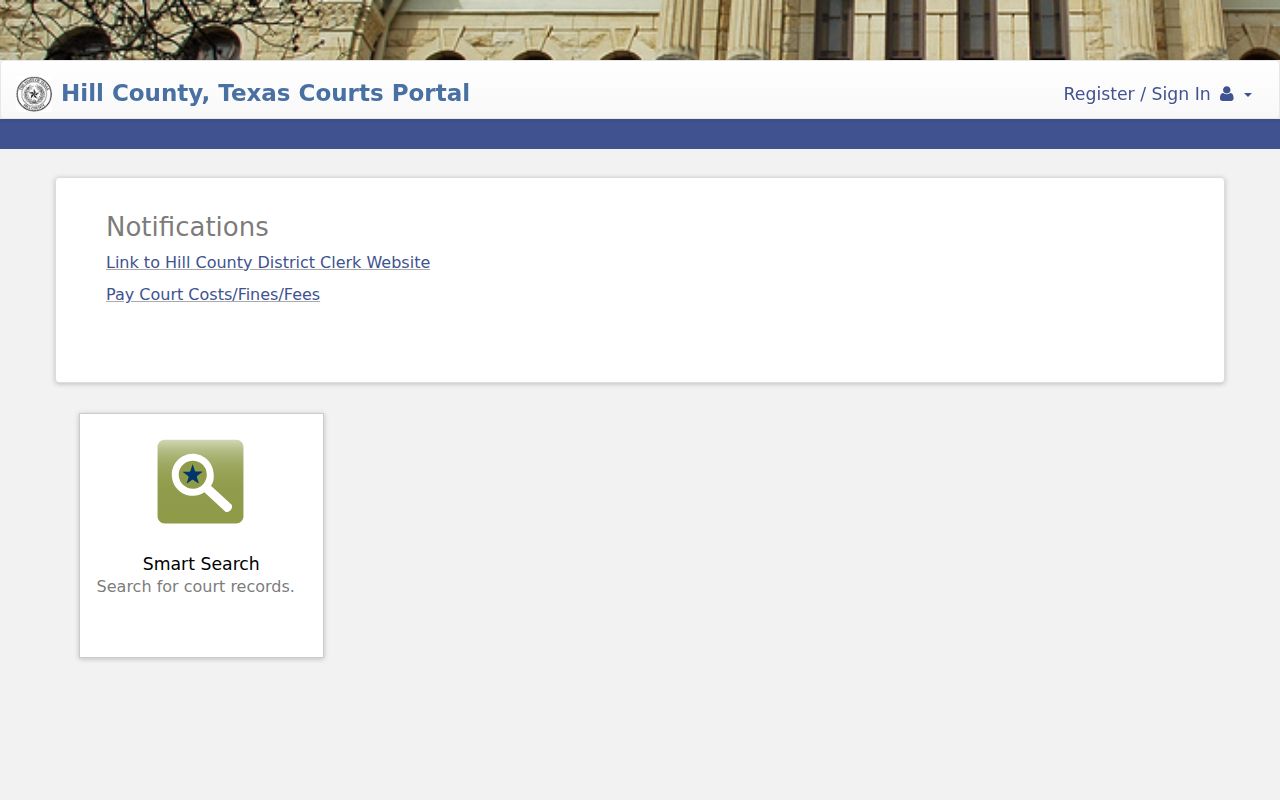
A login or case search screen does not establish that the system checks every warrant.
Warrant Search Fields Explained
No public Hill County warrant form was found, so its required name, birth-date, number, and court fields remain unverified. The table marks questions to ask a clerk, not controls that were observed on a live site. This distinction keeps a research schema from becoming an invented search interface.
| Field Label | Type | Required | Notes |
|---|---|---|---|
| Name | Not verified | Unknown | Ask whether the office searches a name and how it handles a common name. |
| Date of birth | Not verified | Unknown | Do not send sensitive identity data until the official office explains its process. |
| Cause or citation number | Case identifier | Useful when known | The District Clerk says a search without a cause number may incur a fee. |
| Warrant number | Not verified | Unknown | No local public number format was found. |
| Court or jurisdiction | Office route | Required for a complete inquiry | JP, city, county, district, and federal records are separate. |
A Cause Number Points to the Right File
A case identifier is often more useful than a name alone. The District Clerk’s records page says a request without a cause number may involve a $5 search fee and added research. That applies to the clerk’s records process, not to every court or to warrant resolution.
The District Clerk records page explains the court portal and copy route. Its capture shows where case records and request instructions sit.
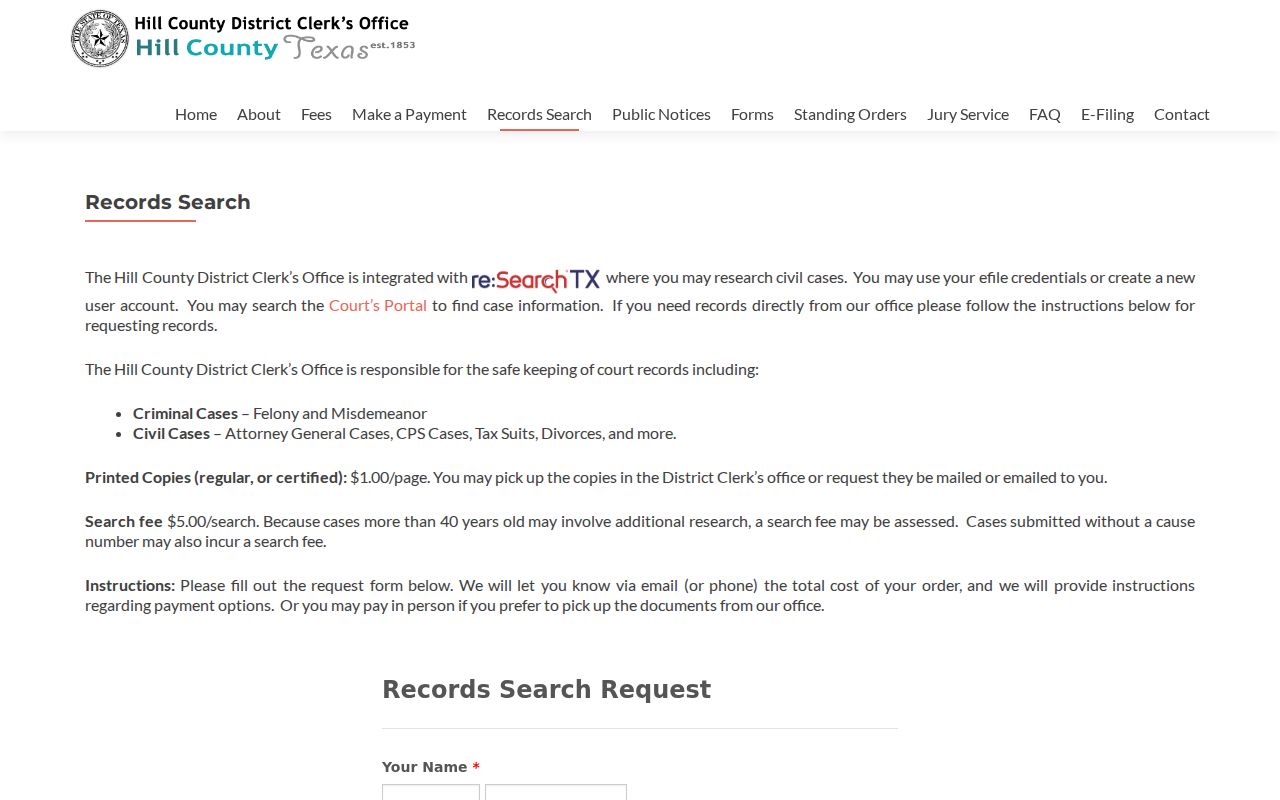
Ask the clerk whether the record is public, whether a copy fee applies, and which court must confirm a current warrant status.
What a Warrant Search Shows
Hill County did not publish an official sample warrant result. This field list is a cautious checklist for a records inquiry, not a promise that every entry appears in the portal. The court and serving agency may keep different parts of the record.
| Example only | Cause number: 2026-CR-0000 This synthetic value is not a Hill County format or live record. |
|---|---|
| Process type | Ask whether the file describes arrest, bench, capias, or capias pro fine process. |
| Issuing court | Use the court name to find the office that can change or recall the process. |
| Service or return | The executing agency may hold a separate return-of-service record. |
| Current status | Ask the clerk to confirm whether the entry is active, served, recalled, or closed. |
Hill County Warrant Records Use Separate Courts
The 66th Judicial District Court handles felony cases, the County Court at Law is the main misdemeanor court, and four JP precincts handle many traffic and Class C matters. Hillsboro, Whitney, Itasca, and Hubbard have identified municipal-court routes. A single county page could not be complete without those separate offices.
Use the issuing court on the paper. If none is shown, the Justice page and each city’s official court page help identify the correct clerk.
Where to Check Warrants in Hill County
The Sheriff is the county law-enforcement route. The District Clerk handles felony and misdemeanor case files. JP and municipal clerks control their own lower-court citations and process. Those records do not all feed one public screen. A case portal can aid a court-file search, but its presence does not show that every warrant is indexed.
Texas has no single public statewide warrant search. DPS’s FTA/FTP system deals with certain court-reported license holds. It cannot confirm warrant status. Federal cases use federal court records and can be sealed.
The District Clerk’s official office page identifies the clerk and court-record route for felony and misdemeanor files.
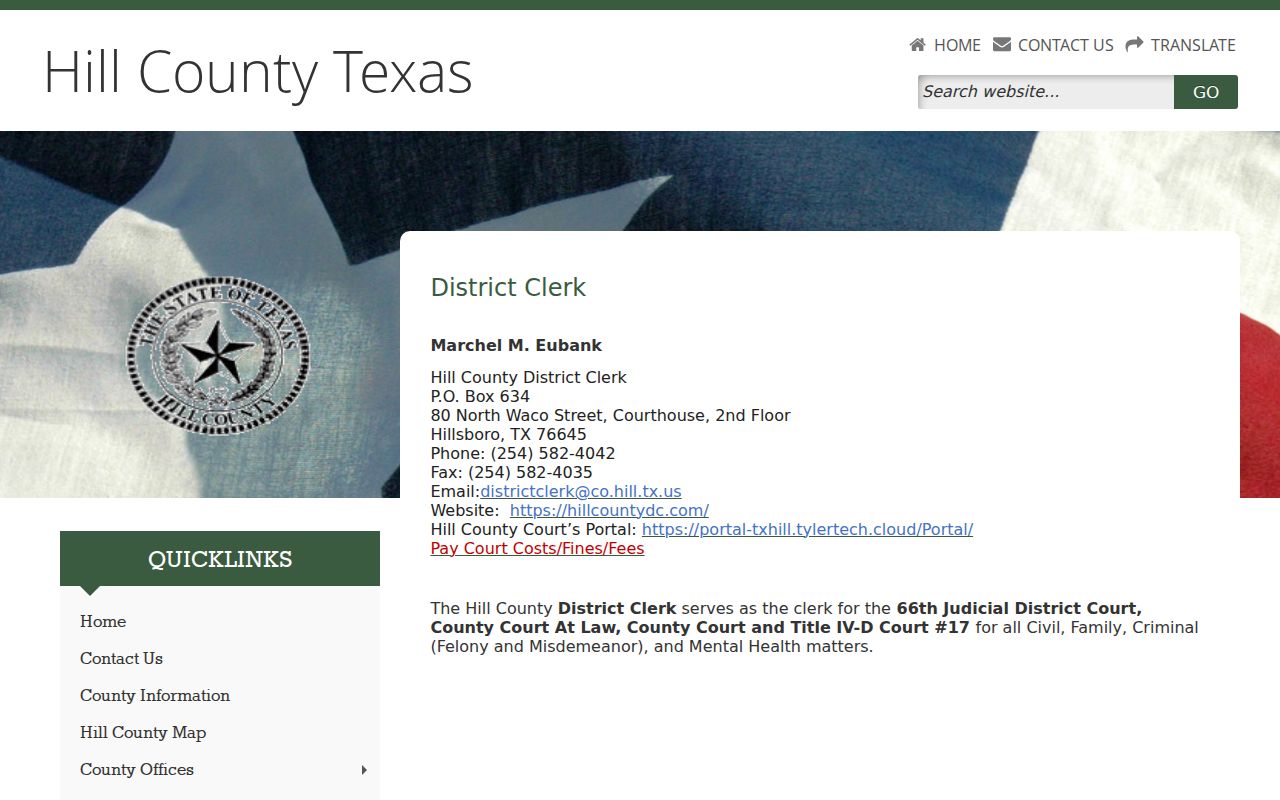
This office page provides a contact path, not a public search of every JP or municipal warrant.
A Hill County Warrant Search Must Name the Court
Start with the paper’s court name, not with a general web search. A citation from a city may belong to municipal court; a county-road citation may go to a JP precinct. A felony or misdemeanor file is routed through the District Clerk and its court. The Sheriff can help identify the law-enforcement contact, but a court decides recall or a new setting.
The county District Clerk page provides the official criminal-record route. If you need a federal record, use PACER or the federal clerk rather than treating a Hill County lookup as nationwide.
Restricted Warrants and Access Rules
Texas public information law applies to existing records held by the office that receives a request. A court may use separate access and copy rules. Active investigations, sealed papers, and juvenile warrant records can be withheld or limited. Ask for the specific record and a redacted copy when appropriate.
Key Rules:
A custodian may withhold law-enforcement information when release could interfere with investigation or prosecution under Texas Government Code § 552.108.
Texas Family Code § 58.010 restricts a child’s arrest warrant and related complaint or affidavit.
A blank result cannot prove that no warrant exists. Ask the issuing court to confirm current process.
The juvenile-record limit is shown in the official statute. Read Texas Family Code Chapter 58 before making a request about a child’s case.
The statutory rule is an access boundary, not an alternate search channel.