
Hill County Arrest Warrant Requests Begin With a Judge
An arrest warrant is judicial process, plain and simple. It authorizes an arrest. Before signing one, a Hill County judge or magistrate reviews the legal basis under the procedure that fits the offense and the court. No single complaint path covers every case; the charging route varies. The 66th District Court handles the felony side. Its published policies are local court materials, not a public warrant roster and not a substitute for asking the court directly about a live case.
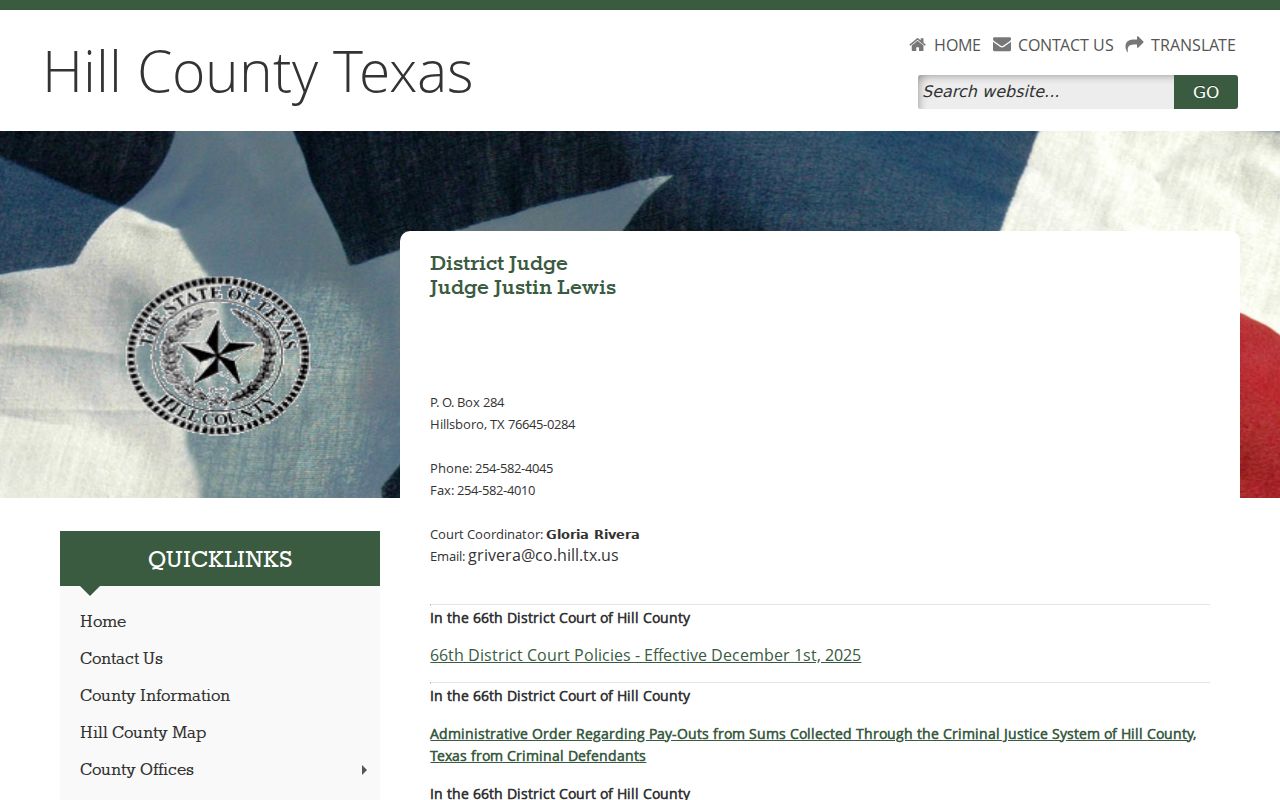
Ask the court which cause number and filing control the process.
Hill County Arrest Warrants Explained
A sworn complaint, an affidavit, or other authorized charging material goes before a judge or magistrate. If the court issues process, the order states the authority to arrest on its own terms. Which local file route applies depends on the court and the offense level. The District Clerk's page identifies criminal records for both felony and misdemeanor cases. Municipal and JP courts can also issue process for matters within their jurisdiction. The Sheriff page posts no active-warrant roster, so a Hill County warrant search has to run through the courts and clerks, not a list.
A Complaint and Affidavit Form the Case Record
The complaint or affidavit may spell out the legal basis, but it can also be sealed, limited, or withheld while an investigation is active. A public docket can show a case without exposing every warrant field. Ask the court whether the document is public at all, and whether a redacted version can be released instead. Requests work best by cause number. That routes faster than a broad demand for a person's records. The Hill County District Clerk can explain its case-file process and any search or copy charge that applies.
Inside a Hill County Arrest Warrant
Hill County publishes no sample warrant and no field-level export for the public. Instead, a requester can ask the clerk or agency which specific fields exist, such as cause number, issuing court, and return status, since no local search result displays them.
| Example identifier | Synthetic only: 2026-CR-0000 Hill County does not publish a confirmed warrant-number format. |
|---|---|
| Cause number | Connects the process to the court case and helps the clerk route a record request. |
| Process type | Ask whether the file concerns an arrest warrant, capias, or another order. |
| Issuing court | Shows which court controls the process and later recall or setting. |
| Service return | May be held by the serving agency, apart from the court file. |
| Current status | Confirm issue, service, recall, or closure with the current record holder. |
Hill County Arrest Warrant Status May Split Across Offices
Warrant status often splits across offices. The issuing court records the legal process, while the Sheriff, a constable, city police, or another peace officer receives and executes it. A court docket can lack the service return. An agency record may not show the court's later recall. Ask each office which part it holds. The District Clerk routes felony and misdemeanor files, and the Sheriff's official contact is the county law-enforcement route. Neither page, though, offers a complete public warrant search for Hill County.
Serving Arrest Warrants in Hill County
In Hill County, the Sheriff, constables, city police, and other peace officers may receive, serve, or return process within their own authority. The county's 2026 fee schedule describes service work and its costs. It does not show which agency holds a particular warrant, and it sets no one's bond. After an arrest, Texas law calls for prompt magistration, generally no later than 48 hours. A magistrate may give warnings and address bail where applicable. Booking, release terms, and the criminal case itself are separate stages, each with its own record.
A Return of Service May Sit With the Agency
A service return records that process was executed or that an attempt was made. That return may live in the agency's file rather than the clerk's public case view. Ask for the court's order and the agency return as two separate records, if each is public. The county Constable page identifies precinct service routes around Hill County. The listed offices and fee lines do not establish who was assigned to any specific warrant.
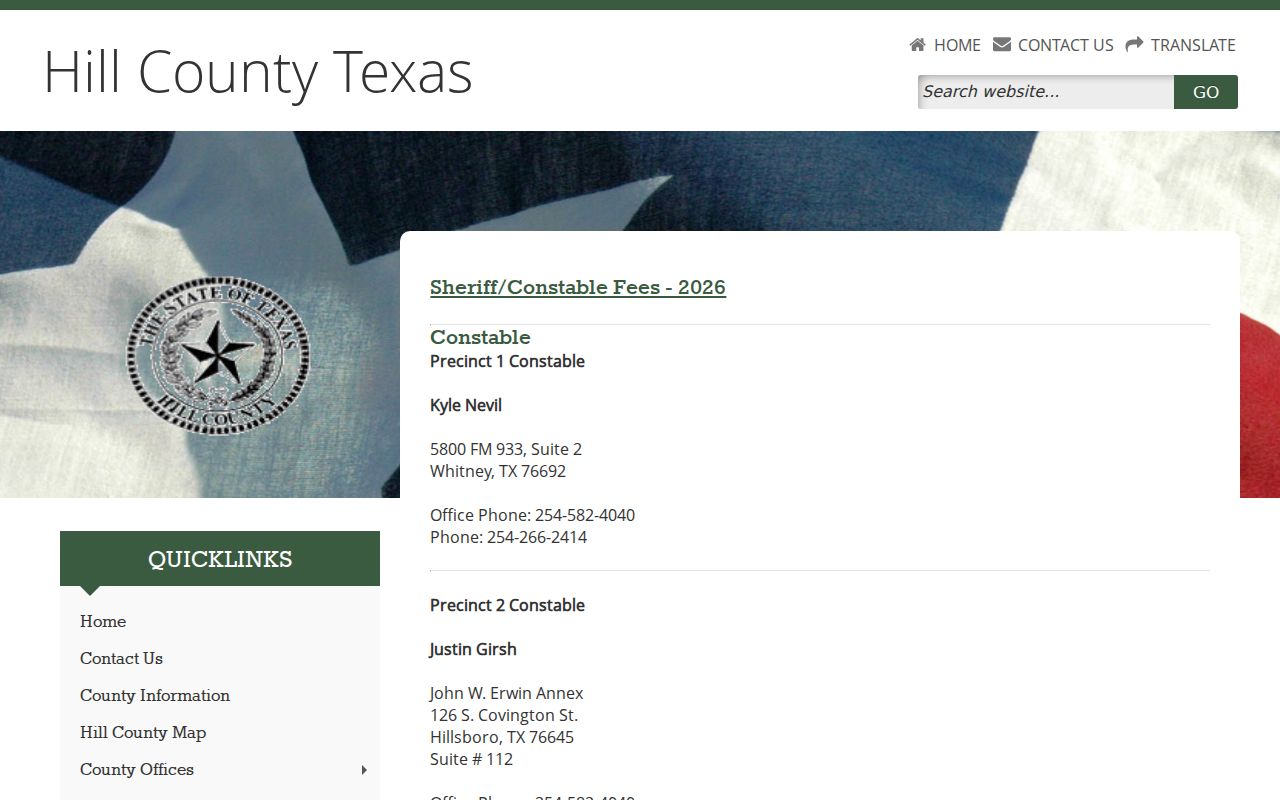
Use an official case or process number when asking which agency holds a return.
Comparing Arrest, Summons, and Bench Warrants
These papers do not mean the same thing in Hill County courts. An arrest warrant authorizes custody. A summons directs a person to appear. A bench warrant usually follows a missed court obligation, such as a failure to appear. Read the first charging document and any later process as separate records, because one case can hold several.
| Feature | Arrest Warrant | Summons | Bench Warrant |
|---|---|---|---|
| What it orders | Arrest under the terms of the order | Appearance at a stated court date | Custody or court action after noncompliance |
| Basis | Judicial review of a criminal complaint | Direction to appear | Missed setting or court obligation |
| Who issues it | Judge or magistrate | Court under its procedure | Court handling the case |
| Next step | Ask about counsel, bond, and court action | Appear as directed | Ask about recall, motion, or new setting |
Federal Process Is Outside County Records
A federal arrest warrant is not cleared by a Hill County clerk. Federal cases can be searched through PACER. Still, sealed process may not appear in a public docket, and operational records can sit with a federal agency. For that route, use a federal clerk or an attorney. PACER's official pricing page explains its docket-access fees, but it carries no Hill County status at all.
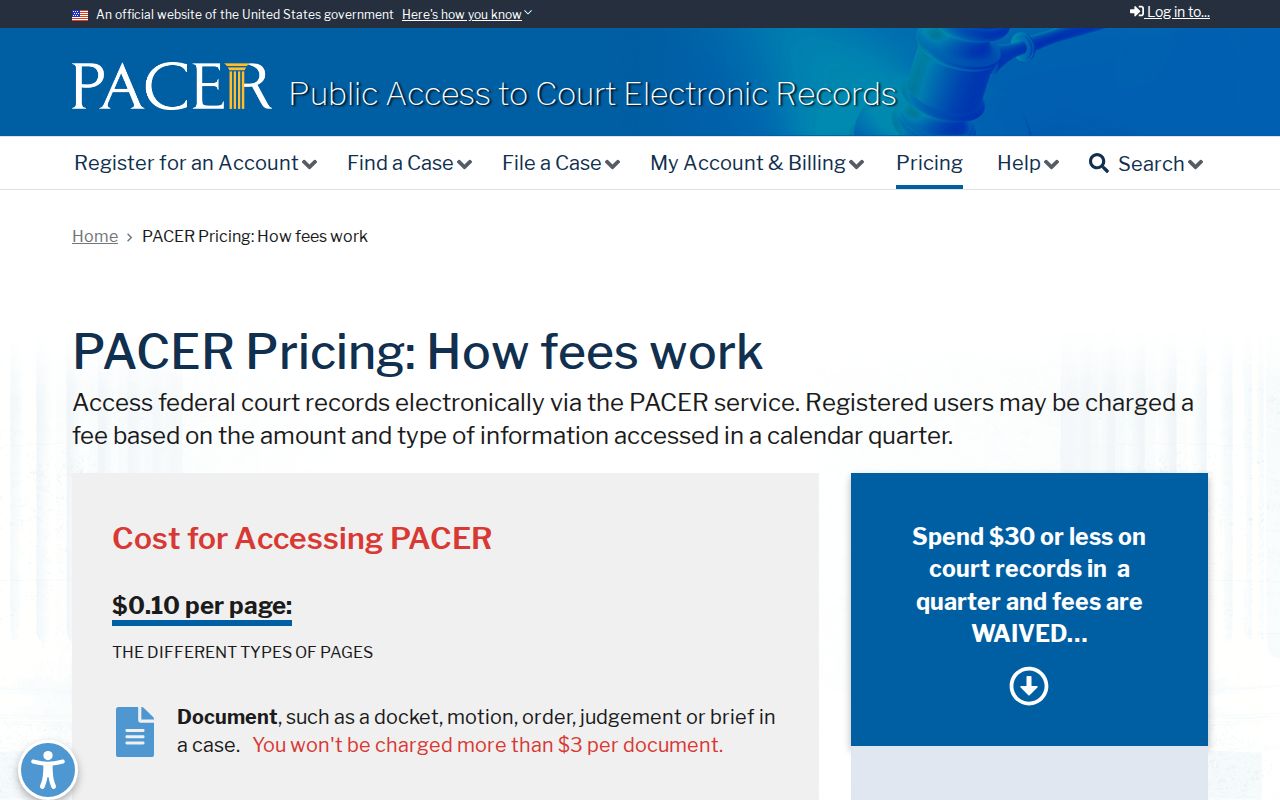
The federal venue site for the Waco Division has been unreliable, so confirm the current clerk route before relying on any address for Hill County federal matters. A quick call to the federal clerk avoids a wasted trip.
If There's an Arrest Warrant for You
Call the issuing court, or have counsel do it. Confirm the current process, court number, bond status, and whether a setting or motion is available. Hill County offices publish no guaranteed walk-in surrender hours, no public bond-window hours, and no universal bond amount. A court may set terms only after booking. And posting bond does not end the underlying case, so plan for the hearings that follow.
Before appearing: Speak with an attorney about a setting, walk-through, or surrender. Voluntary contact can still lead to booking; ask the issuing court where and how to report.
Keep every paper: the case filing, any motion, release order, bond receipt, and recall confirmation. In Hill County the court controls status. The Sheriff's phone line can route a question, but it cannot promise a release outcome.
Hill County Arrest Warrant Needs Court Confirmation
Start with a status check, not a fresh investigation. Hill County's PIR form will take a request for documents, but the County will not build a record or answer questions for you. Material tied to an active investigation, a juvenile, a sealed file, or officer safety can stay off limits. Send law-enforcement record requests to HCSO Open Records. For felony or misdemeanor cases, the District Clerk can route you to the court file. When a recall order or return of service is public, ask for it by cause number. That is the cleanest way to confirm what the issuing court has done.