
Hill County Has No Single Public Warrant List
Hill County keeps no single public roster of active warrants. The Sheriff's site offers a phone line, a records email, and a custody-status link, but no warrant list. The county court pages and the Tyler portal publish no verified warrant-status field either. So a name that turns up blank in one spot settles nothing about process another court holds. If an arrest warrant seems likely, call the Sheriff at 254-582-5313 for routing, then ask the issuing court to confirm the current status. VINELink covers custody only. It is not a warrant lookup.
Checking for a Warrant in Hill County
No one search reaches the Sheriff, all four justice courts, and every municipal court in Hill County. Start with the paper that named the court. For felony or misdemeanor files, the District Clerk and the listed court are the right records route. A possible arrest-warrant question can also begin with the Sheriff. A traffic citation points to a JP or a city court. Before you call, have the cause or citation number, the court name, and the date in hand. One caution: never send a full driver-license number through an unverified form. Work in this order:
- Read the citation or notice and note the issuing court and case number.
- For a felony or misdemeanor file, use the District Clerk’s official portal or ask the clerk what the public record can show.
- For a Class C or traffic case, contact the JP precinct or municipal court printed on the paper.
- If the issuing office is unclear, call the Sheriff for routing. Send a PIA request only for an existing record or written procedure.
- If the court confirms active process, ask an attorney and that court about a setting, motion, payment, or other approved step.
Four Justice Precincts Shape the Traffic Route
Hill County runs four justice precincts: JP 1 in Whitney, JP 2 in Hillsboro, JP 3 in Malone, and JP 4 in Itasca. The precinct named on the citation matters more than where you live. A city citation might belong instead to Hillsboro, Whitney, Itasca, or Hubbard Municipal Court. The court name tells the clerk which file to pull. The county's Justice page lists all four offices. Treat it as a routing directory, not a warrant search. Lost the citation? Give the court the issuing agency and the date, then ask which case number applies.
Hill County Warrant Types
Different papers can carry the word warrant while pointing to separate court steps. In Hill County, the 66th Judicial District Court handles felonies, and the County Court at Law is the main misdemeanor route. JPs and municipal courts hear most Class C and traffic cases. A court, not a payment page, controls the process it issued.
| Warrant Type | How It Arises | Who Issues It |
|---|---|---|
| Arrest warrant | Judicial process after a criminal complaint or other lawful basis | Issuing judge or court |
| Bench warrant | Missed appearance or failure to follow a court direction | Court that set the case |
| Search warrant | Probable-cause process for a search, not a public self-check list | Judge or magistrate |
| Capias pro fine | Post-judgment enforcement in justice or municipal practice | Issuing JP or city court |
FTA and FTP cases can also trigger a license-renewal hold once a court reports the matter to DPS. That hold runs through a separate state process. It is not proof of a warrant, and it is not a full search of local Hill County court files.
A Hill County Name Match Needs Court Review
Hill County publishes no sample warrant result and no confirmed list of search fields. The Tyler portal is dynamic, and its landing page shows no warrant-specific search. Another county may accept a birth date, partial name, warrant number, or court dropdown. That does not mean this one does. When a record appears, ask which court and case number it belongs to, whether the status is current, and when the display last changed. A clerk can tell you which record was searched. Treat any result as a lead for official confirmation, not a recall order.
Inside a Hill County Warrant Record
Hill County posts no public field-level sample of a warrant record. The table serves as a request checklist, not a claim that every court or Sheriff system shows each item. Use a cause number where you can, and ask the office holding the record to explain any status code.
| Process number | Sample only: 2026-CR-0000 Hill County has no verified public number format; this is not a live case. |
|---|---|
| Case identifier | Cause or citation number links process to the court file. The District Clerk says a search without one may bring a search fee. |
| Issuing court | Identifies the judge and clerk that control a recall, setting, or other court action. |
| Process type | May distinguish arrest, bench, capias, or capias pro fine. Local labels need explanation. |
| Service and return | May be held by the serving agency rather than the court clerk. |
| Current status | Ask whether the item is active, served, recalled, or closed, and when it was last updated. |
A Clear Search Is Not a Clearance
Hill County has no single public warrant index, and a negative result may just mean the system misses a court or city. An online case portal can help you locate a file, but no verified warrant-specific field set appears on it. A recent order may also be sealed, withheld, or not yet reflected across systems. So treat the Tyler portal as a court-information route only. Ask the clerk which court records it covers. Then contact the issuing office directly about active process.
Issuing and Serving Warrants in Hill County
In Hill County, the courts do the issuing. A judge can recall a warrant or change its terms later. The Sheriff, constables, and city police then handle service and record the return. For a case setting or a recall, though, the serving agency cannot answer; only the issuing court can. The Constable page names four precinct routes, and a fee schedule alone will not tell you which officer holds a given case.
Hill County Sheriff’s Office
406 Hall Street
Hillsboro, Texas 76645
254-582-5313
Hill County Warrant Questions Go to Different Offices
Warrant questions in Hill County split by level, so call the right office. The District Clerk tracks felony and misdemeanor criminal files and points people to the court portal. County misdemeanor cases go through the County Court at Law. For a lower-level citation, the JP or municipal clerk named on the notice is the one to contact. If your question is how an arrest warrant gets routed, the Sheriff's phone line is the county law-enforcement contact. The County Court at Law page posts its forms and contact route. Just don't confuse the County Clerk's general records role with the criminal-file route.
If You Have a Warrant in Hill County
Start by naming the court and the type of process on the paper. Then ask what the court wants: a motion, a new setting, payment, a hardship review, or an appearance in person. Paying a balance alone may not end a warrant in Hill County. So request the court's recall or closure confirmation in writing. The 66th District Court and County Court at Law publish local policies and forms, but the issuing court decides which step applies.
Before appearing: Ask an attorney or the issuing court about booking, bond, a motion, and the safe place to report. Voluntary contact does not guarantee release without custody.
Keep every document. That means the citation, the cause number, any motion you filed, the receipt, the release paper, and the written recall order. If DPS was notified, ask the Hill County court when it sends clearance, and check the hold again only after that processing time has passed.
A Payment Receipt Is Not a Recall Order
Each Hill County court takes payment a different way. Hillsboro posts an online citation-payment link, the District Clerk payment page wants a case number, and Itasca's municipal procedure names a $50 fee whenever a warrant is served or processed. That Itasca figure applies only in that court. The statewide cost schedule and Sheriff service fees are not a universal balance anyone can compute in advance. Before sending money, ask the issuing court for the full amount due, the accepted method, whether an appearance is still required, and how recall gets recorded. Then keep the payment proof and the court's status confirmation together.
Hill County Warrant Records and Public Access
The Texas Public Information Act covers records that already exist and are held by Hill County offices, subject to legal exceptions. Staff do not have to create a record, run a search for you, or answer a question, and the county form says so plainly. Court files also follow clerk procedures, fees, and any sealing order in force. Send a request to the wrong office and you may get no record at all, even while another court holds the file. The county's PIA instructions describe the local process. Ask there for a current written procedure, a redacted field list, or a case record by number.
Key Rules:
Texas Government Code Chapter 552 covers existing public information, subject to exceptions such as active investigations.
Texas Family Code § 58.010 restricts a child’s arrest-warrant and complaint records.
Texas Code of Criminal Procedure Chapter 45A sets justice and municipal court procedures for capias pro fine matters.
The county form asks only for existing records. Its fee list requires an estimate above $40, and charges above $100 may call for prepayment or a bond. These are Sheriff records-request rules, not warrant-clearing fees. Read the official Hill County request instructions before you prepare anything.
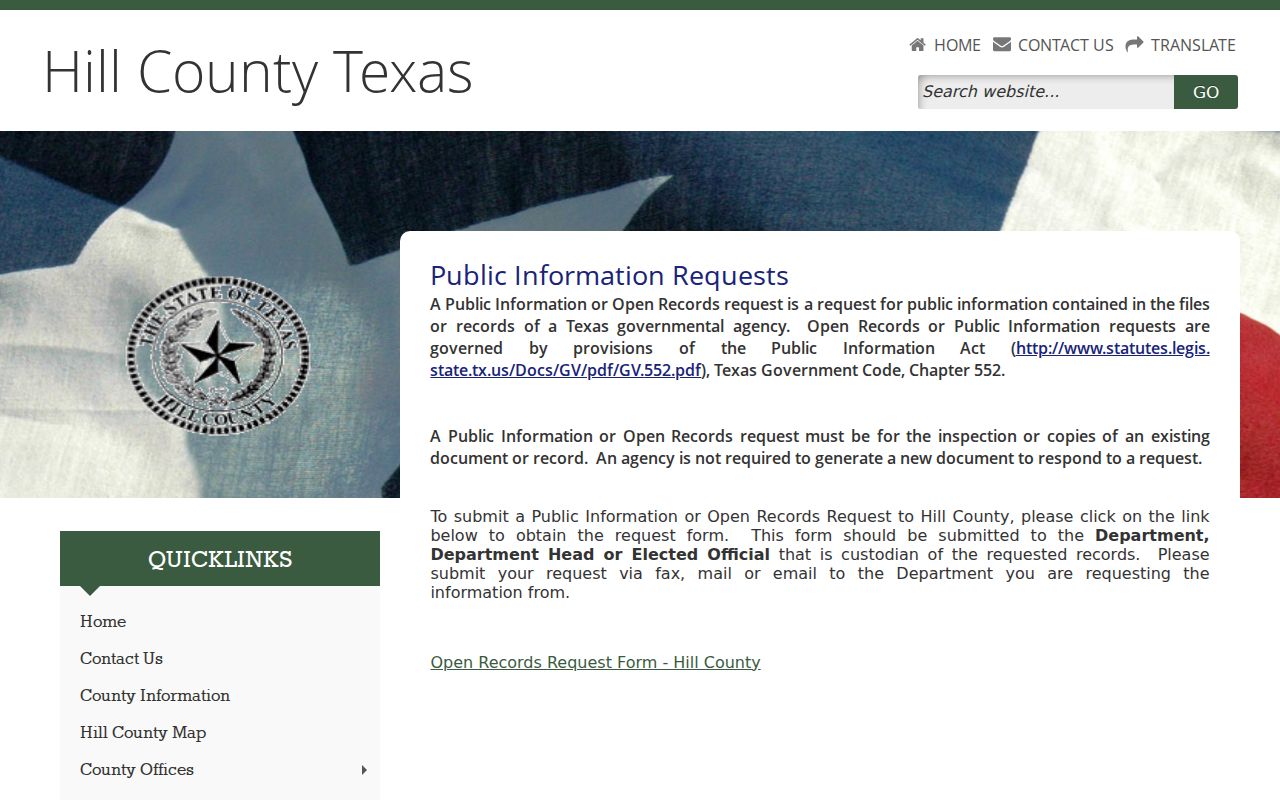
A narrow request for the written process works better. Asking Hill County to run a search or build a new report invites a refusal.
Hill County Warrants by City
City and county routes are not interchangeable. Hillsboro, Whitney, Itasca, and Hubbard each have official municipal-court pages; Blum posts no city court or police page. The issuing court named on the citation is still the best starting point. Every Hill County city link carries its own contacts and local limits.
Hillsboro Warrant Search
8,221 residents in 2020 · Municipal Court, police, forms, and payment routes.
Whitney Warrant Search
1,992 residents in 2020 · Municipal Court or JP 1, as named on the citation.
Itasca Warrant Search
1,562 residents in 2020 · Court procedure lists appearance dates and a local fee.
Hubbard Warrant Search
1,394 residents in 2020 · Court landing and police routing, with limited court details.
Blum Warrant Search
383 residents in 2020 · City Secretary is the verified first contact.
The official Census table supplies the population ranking behind these five profiles. It reports no warrants or court activity.
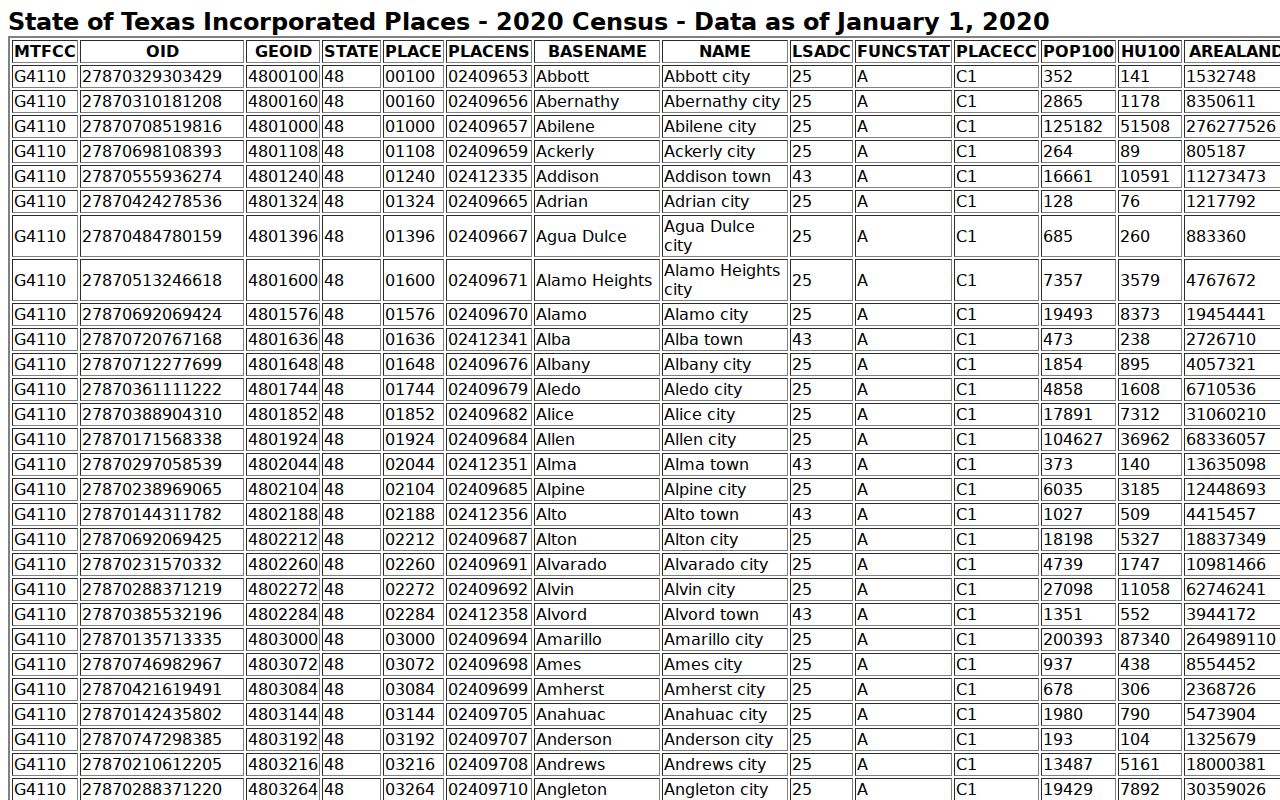
The city pages keep each Hill County court route distinct. A population rank is never a warrant count.