
Hill County Bench Process Starts With a Case Number
A Hill County bench warrant usually traces back to a missed court appearance or a disregarded court order. The label alone tells you little. The file could sit in District Court, in County Court at Law, in one of four JP precincts, or in a municipal court. The case number and court name printed on your citation or notice will point the way. Lost the paperwork? Ask the District Clerk or the issuing agency which court handled the matter. Settle that first. Then request a status check on the warrant from the right office.
Hill County Bench Warrants Explained
A bench warrant is court process associated with a missed appearance or failure to follow a court direction. It may arise in a felony, misdemeanor, justice, or municipal case. The court that set the date controls the next step; the label does not tell you whether the case is criminal, civil, or a traffic matter.
A missed setting is different from a new criminal complaint. A judgment that was not satisfied may instead lead to capias pro fine process in a JP or city case under Texas Chapter 45A.
Missed Court and New Charges Follow Different Paths
A bench warrant usually grows out of an existing case or missed obligation. An arrest warrant is tied to a judicial finding that process may issue on a criminal complaint. Both can lead to custody, but their case records, triggers, and court questions differ.
The Hill County arrest warrant route describes the separate probable-cause process. Ask the clerk whether the paper concerns an existing case, a new charge, or a different type of order.
How Hill County Bench Warrants Are Issued
The judge or court issues process after the relevant event and under the procedure for that case. The court record may show the missed setting, order, or later recall. A serving agency may hold a separate record of receipt, service, or return.
Do not assume every bench warrant enters one county list. Hill County has no verified public all-court warrant roster, and Texas has no single statewide public warrant search. Current status must come from the court or lawful record holder.
JP Citation Starts With Its Precinct
JP 1 is in Whitney, JP 2 in Hillsboro, JP 3 in Malone, and JP 4 in Itasca. Use the precinct on the citation rather than guessing from the person’s town. Each justice court has its own phone and case route.
The county’s official Justice page brings the four offices together. Its contact list helps route a citation, but it is not a warrant lookup.
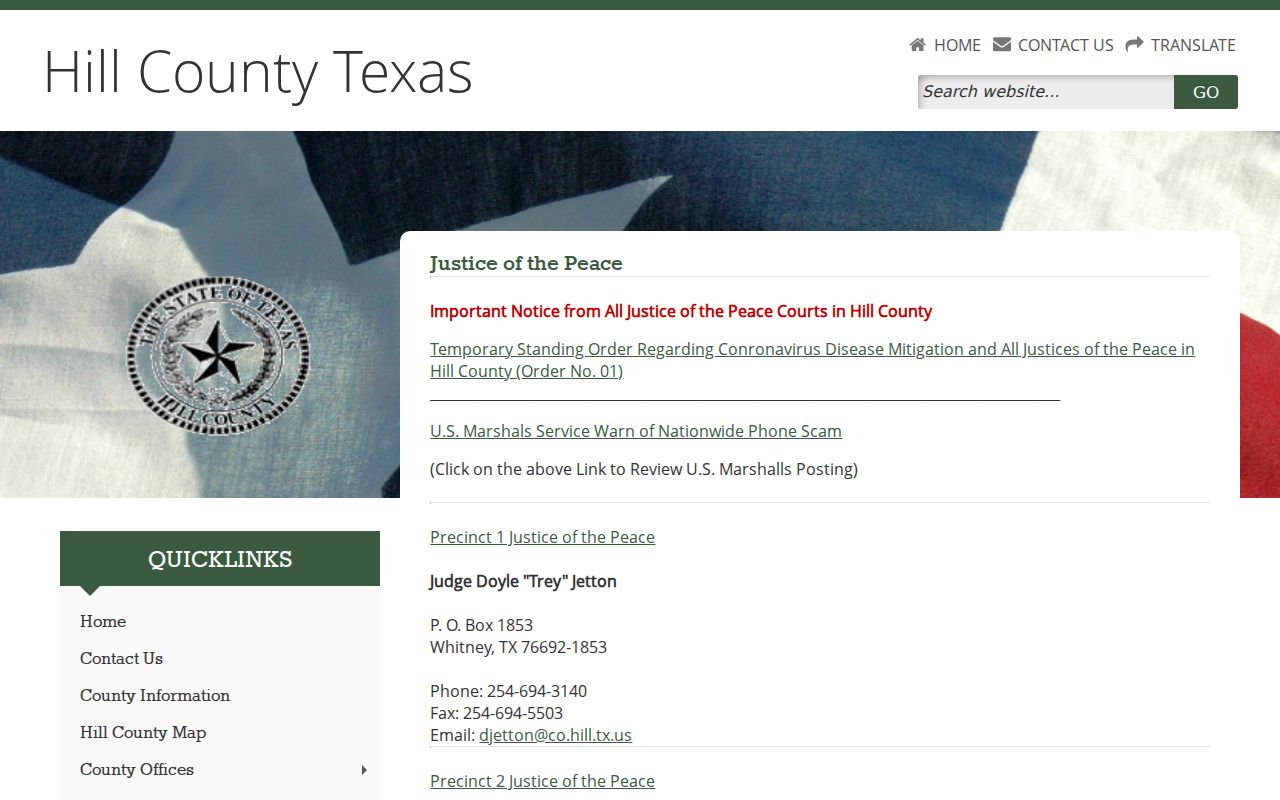
Once the precinct is known, ask that JP whether the case needs a setting, payment, or motion.
Bench Warrants and Arrest Warrants Compared
Both kinds of process may lead to arrest, but one follows a court obligation and the other follows a criminal complaint. The issuing court and case number guide the record request. The Sheriff or constable may serve process, while the judge controls its recall.
| Feature | Bench Warrant | Arrest Warrant |
|---|---|---|
| Trigger | Missed appearance or noncompliance | Criminal complaint and judicial finding |
| Who issues | The court handling the existing case | A judge or magistrate under applicable procedure |
| Record route | Case court and clerk | Issuing court and serving agency |
| Next question | What setting, motion, or payment is required? | What court action or release term applies? |
Itasca Names a Local Warrant Fee
Itasca Municipal Court says a $50 warrant fee applies if a warrant is served or processed. That statement belongs to Itasca’s own procedure. It is not a countywide amount and does not tell a person’s total balance or bond.
The city’s municipal procedure page also describes appearance dates, pleas, and pretrial motions. Ask the issuing court whether the fee applies and what action remains.
Resolving a Hill County Bench Warrant
The court or attorney can tell you whether a new setting, motion to recall or quash, payment, hardship review, or counsel-arranged appearance fits the case. County sources do not establish walk-in recall hours or a guaranteed walk-through process. Use an official court contact and ask before traveling.
- Confirm the case number, issuing court, and whether process is current.
- Ask what motion, appearance, or payment the court requires.
- Consult counsel if arrest or bond is a concern before appearing.
- Use the court’s approved method and keep each receipt or filed paper.
- Request written confirmation that the court recalled or otherwise closed the process.
Caution: Do not rely on age or a payment screen to end process. Ask the issuing court whether a judge must sign a recall or set a new date.
Hill County Bench Warrant Recall Needs Court Action
A Sheriff inquiry can route a person, but only the issuing court can explain the case action that ends judicial process. Payment and recall may be separate. Ask for the order date, docket entry, or other written proof that the court changed status.
If the matter was reported to DPS, ask the court when it will send clearance. DPS cannot decide whether a local bench warrant exists or whether the court has recalled it.
Finding the Court That Issued the Warrant
A bench warrant stays tied to the case and court that set the obligation. The Sheriff or a constable can serve process, but it cannot replace the judge who decides a recall or a new setting. A County Court at Law misdemeanor, district felony, JP citation, and municipal ticket each have a different clerk route.
The County Court at Law lists its misdemeanor contact. The county directory also identifies the District Court and four JP offices. If you cannot identify the court, use the citation, case paper, or official clerk contact rather than a third-party listing.
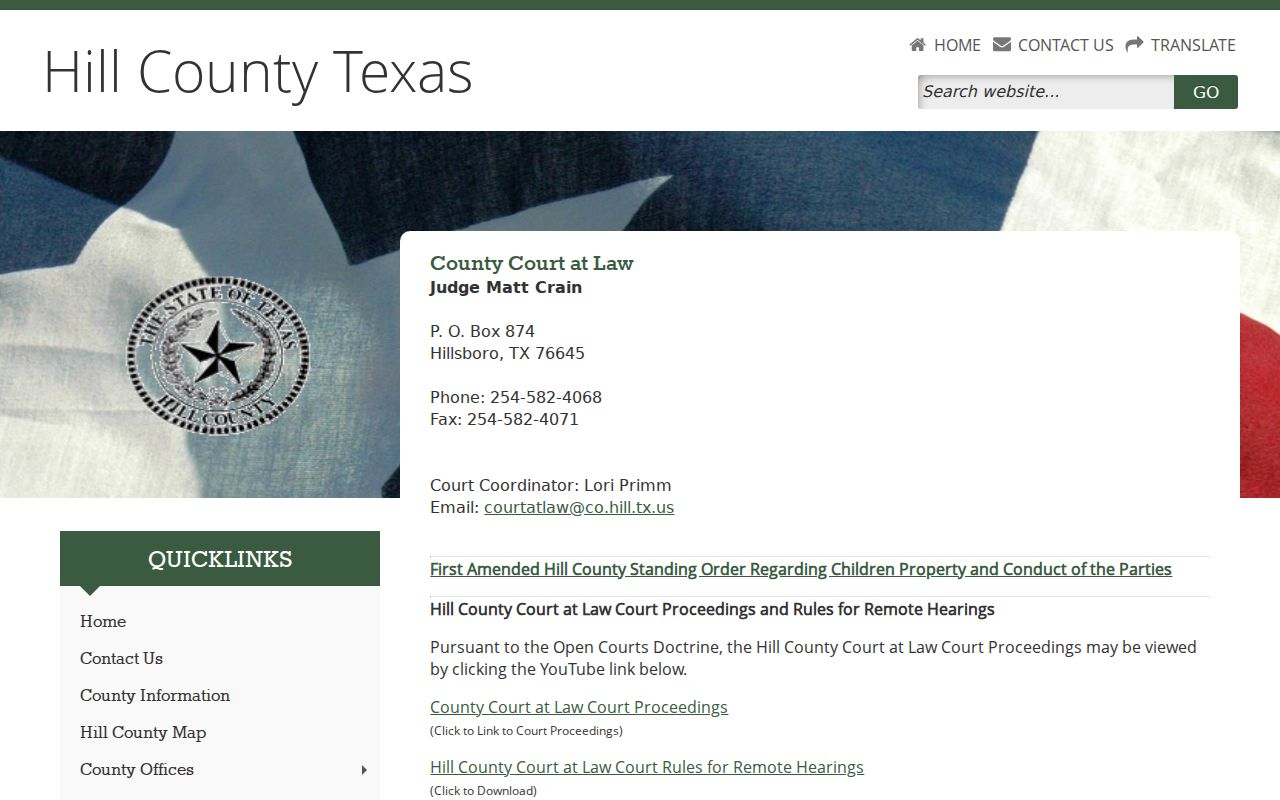
The court’s forms help identify procedure; they do not prove a warrant’s current status.